Commercial cleaning frequency Tennessee depends on the specific type of facility, with medical offices requiring daily high level disinfection while standard office buildings typically need service three to five times per week. Warehouses and retail stores often follow a customized weekly or bi-weekly schedule to maintain safety and cleanliness standards based on foot traffic and operational needs.
Maintaining a pristine facility in Tennessee often feels like a balancing act between managing tight operational budgets and meeting the high expectations of clients and staff. You might find yourself questioning if your current cleaning schedule is truly effective or if you are simply overpaying for services that do not align with your actual foot traffic. In professional environments, consistency is the foundation of safety and brand reputation; however, the needs of a high-volume retail space in Nashville differ vastly from a specialized industrial warehouse in Chattanooga. This guide provides an expert breakdown of facility-specific cleaning standards, ranging from medical compliance to office productivity. By exploring the unique demands of different sectors, you will learn how to build a customized maintenance plan that ensures your Tennessee business remains clean, compliant, and welcoming without unnecessary waste.
Factors That Determine Your Tennessee Commercial Cleaning Frequency
Determining the right commercial cleaning frequency Tennessee businesses require is never a static calculation. Every facility operates under a unique set of stressors that dictate how quickly dirt and contaminants accumulate. In Tennessee, environmental factors like high seasonal pollen counts and persistent humidity play a significant role. Moisture often traps particulates, leading to accelerated dust buildup on warehouse racking and within HVAC filtration systems. Ignoring these regional variables can lead to poor air quality and increased maintenance costs over time.
Facility usage and foot traffic are the next critical variables. A high-traffic retail outlet in a busy metropolitan area will require more frequent floor care and glass cleaning than a low-occupancy corporate satellite office. Beyond aesthetics, industry regulations from organizations like OSHA or the CDC often mandate specific sanitation intervals to ensure worker safety and public health. For instance, medical facilities usually require nightly disinfection, while industrial sites might focus on weekly power scrubbing to manage grease and debris.
At New Vision Cleaning Services, our foundation in new construction and specialized commercial cleaning services in Tennessee provides us with a unique vantage point. Because we also handle demolition and mobile welding, we understand the structural bones of a building. We know where construction dust hides and how it migrates through ductwork, which allows us to provide a deeper level of service than standard janitorial providers. To develop a schedule tailored to your specific facility's traffic and environmental load, you can contact our team for a custom quote.
Medical Facility Cleaning: Standards for Safety and Compliance
Medical facilities operate under the most stringent sanitation requirements because the stakes involve human health and regulatory compliance. In clinical settings, the standard for commercial cleaning frequency Tennessee providers must meet is rarely less than nightly. This daily cadence is necessary to reset the microbial load of the facility, ensuring that pathogens brought in by patients do not linger on surfaces to infect others the following day.
Effective medical cleaning relies on the systematic use of EPA registered disinfectants. These chemicals are specifically tested to kill resilient viruses and bacteria when applied with proper dwell times. At New Vision Cleaning Services, we focus on preventing cross contamination by utilizing specific protocols for high touch surfaces. These surfaces include door handles, reception counters, light switches, and shared pens; all of which act as primary vectors for disease transmission.
Area Type | Cleaning Standard | Primary Focus |
|---|---|---|
Waiting Rooms | Nightly Disinfection | Seating, door handles, high traffic flooring |
Exam Rooms | Nightly Deep Clean | Exam tables, sinks, cabinetry, medical equipment |
Restrooms | Nightly Sanitation | Fixtures, touchpoints, floor sanitization |
Administrative | Daily Surface Wipe-down | Keyboards, phones, desk surfaces |
Adherence to CDC guidelines for cleaning and disinfection is the baseline for our operations. In the Tennessee healthcare corridor, particularly within the Nashville metropolitan hub, maintaining these rigorous standards is essential for more than just compliance. It is a cornerstone of patient trust. Patients who enter a facility that looks and smells meticulously maintained are more likely to feel confident in the clinical care they receive.
Because our background includes the precision required for new construction, we approach medical offices with an eye for detail that covers often overlooked areas like baseboards and vents where dust can harbor allergens or contaminants. Maintaining a sterile environment requires a partner who understands that a surface is not truly clean until it has been disinfected according to medical grade protocols. To ensure your clinic meets these safety benchmarks consistently, contact our team for a custom quote and learn more about our specialized commercial cleaning services in Tennessee.
Retail Store Cleaning: Maintaining the Customer Experience

While medical cleaning focuses on sterile safety, retail cleaning centers on brand perception and the customer experience. The objective for any storefront is to recreate an "opening day" atmosphere every morning. In Tennessee, environmental factors like the heavy rainy seasons and the resulting red clay mud mean that floors and entryways require constant vigilance. If mud and debris are allowed to sit, they act as abrasives that quickly degrade floor finishes and carpets.
Developing a precise retail store cleaning checklist ensures that no detail is overlooked, from the clarity of the front windows to the sanitation of the restrooms. For most high-traffic shops, the commercial cleaning frequency Tennessee managers should target includes daily attention to high-visibility areas. Glass storefronts, for example, show fingerprints and smudges immediately under bright retail lighting, requiring daily polishing to maintain a professional image.
Cleaning Interval | Essential Retail Tasks | Focus Area |
|---|---|---|
Daily | Sweeping, mopping, entry glass polishing, restroom sanitization | First impressions and floor safety |
Weekly | Floor buffing, baseboard detailing, polishing display cases | Long-term floor protection and shine |
Monthly | High dusting of HVAC vents, light fixtures, and top-shelf ledges | Air quality and removing hidden dust |
At New Vision Cleaning Services, our background in new construction gives us a technical advantage in floor care. We understand the specific sealants and finishes used in modern retail builds, allowing us to provide commercial cleaning services in Tennessee that extend the life of your flooring. By moving beyond basic janitorial tasks to include weekly buffing and monthly high dusting, we help prevent the gradual "dulling" that often plagues older retail spaces. To keep your store looking brand new, contact our team for a custom quote and a site-specific maintenance plan.
Industrial and Warehouse Cleaning: Safety and Dust Management
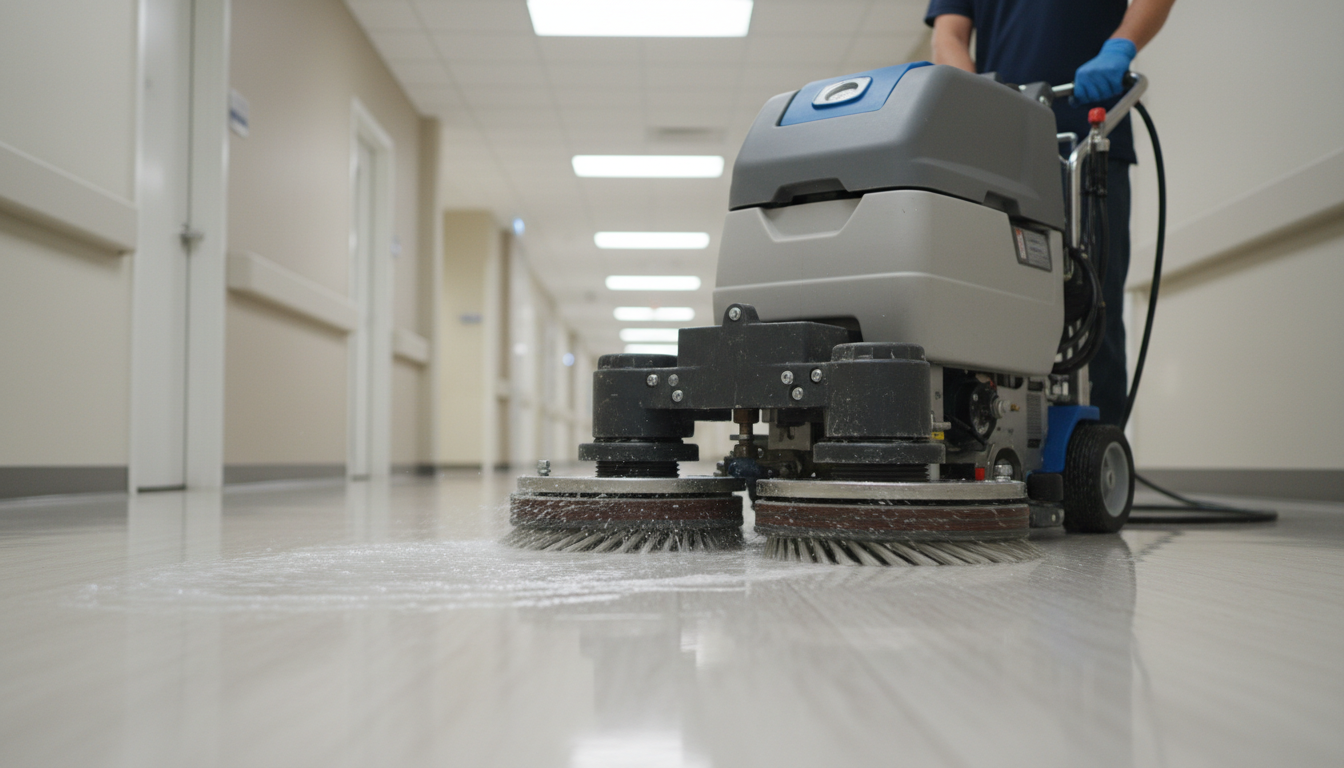
Industrial spaces in Tennessee face a distinct set of challenges compared to climate-controlled retail outlets. In large scale warehouses and manufacturing plants, the accumulation of concrete dust, tire marks from forklifts, and metal shavings can create hazardous conditions if left unmanaged. Effective dust management is not merely a matter of orderliness; it is a critical safety intervention. When determining the commercial cleaning frequency Tennessee industrial managers should implement, the focus must shift from aesthetic polishing to high performance surface maintenance.
Warehouse sweeping best practices involve the daily removal of large debris to keep pathways clear for personnel and machinery. However, sweeping alone does not remove the fine particulates or oily residues that lead to slip and fall accidents. While attached office spaces might receive daily janitorial attention, the warehouse floor requires a tiered approach based on usage intensity.
Task Type | Frequency | Justification |
|---|---|---|
Debris Sweeping | Daily | Prevents tire damage and tripping hazards |
High Traffic Power Scrubbing | Weekly | Removes forklift tire marks and oil buildup |
Loading Dock Degreasing | Bi-Weekly | Mitigates moisture and chemical slip risks |
High Bay Racking Dusting | Quarterly | Improves air quality and reduces fire hazards |
Loading docks and pedestrian pathways represent the highest risk zones. These areas often collect moisture during Tennessee's humid months, which, when mixed with forklift fluid or pallet debris, creates a slick surface. Professional power scrubbing at a weekly or monthly interval, depending on the volume of shipping and receiving, ensures these zones remain compliant with safety standards. This prevents the gradual buildup of grime that can lead to costly citations or workplace injuries.
New Vision Cleaning Services approaches these environments with a perspective that generic cleaners lack. Our secondary specializations in demolition and mobile welding mean we are intimately familiar with heavy duty industrial sites. We understand the grit of a job site and the specific residues left behind by industrial processes. This background allows us to provide commercial cleaning services in Tennessee that handle the toughest industrial grime. To secure a maintenance plan built for a high intensity workspace, contact our team for a custom quote.
Standard Office Cleaning: Productivity and Employee Health
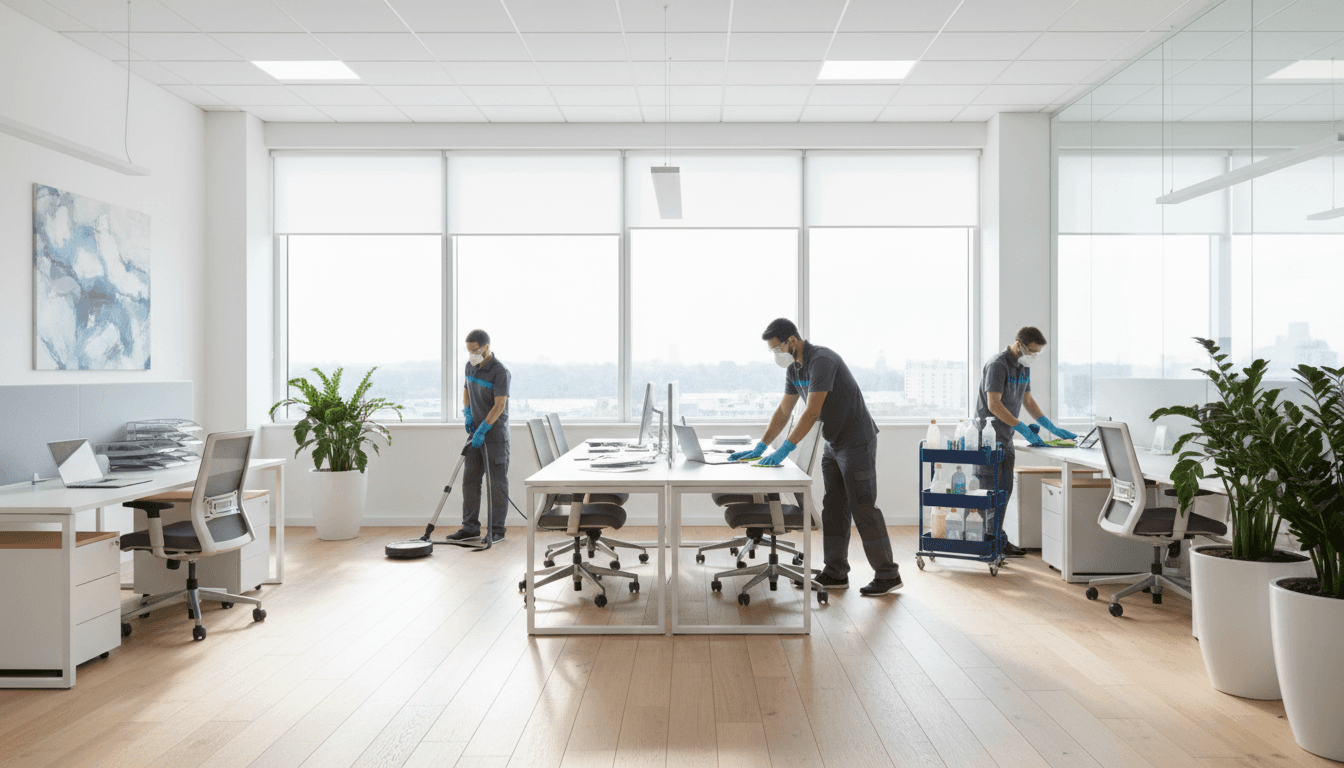
Unlike industrial zones where safety is the primary metric, professional office environments focus on maintaining a high standard of employee health and cognitive focus. The ideal commercial cleaning frequency Tennessee offices require depends heavily on personnel density. A corporate headquarters in Knoxville housing 50 employees faces a significantly higher bacterial load than a small satellite office in a rural community. For larger firms, nightly janitorial service is often non-negotiable to manage the volume of waste and high-touch surfaces.
In high-density offices, common areas like breakrooms and restrooms serve as the primary vectors for illness. These spaces require daily sanitization of sinks, microwaves, and handles to keep staff healthy. Conversely, tasks like deep carpet vacuuming in low-traffic peripheral zones or cleaning interior partition glass can often be moved to a weekly or monthly rotation. This tiered approach ensures resources are allocated where they matter most.
Office Type | Recommended Frequency | Priority Focus Areas |
|---|---|---|
50+ Employee Corporate | Nightly | Restrooms, Breakrooms, Trash Removal |
10-25 Employee Mid-Size | 3x Per Week | High-touch disinfection, Floor care |
<10 Employee Satellite | Weekly | General dusting, Sanitizing shared equipment |
Tennessee experiences intense seasonal shifts, particularly during spring pollen peaks and winter flu surges. Dust and allergens often settle into carpets and upholstery, triggering respiratory issues that decrease productivity. Regular, professional maintenance reduces absenteeism by breaking the cycle of surface-to-hand transmission. At New Vision Cleaning Services, our background in new construction and commercial cleaning services in Tennessee allows us to identify hidden dust reservoirs that standard janitorial teams overlook. To determine the right cadence for your team size, contact our team for a custom quote.
Building Your Custom Commercial Cleaning Schedule
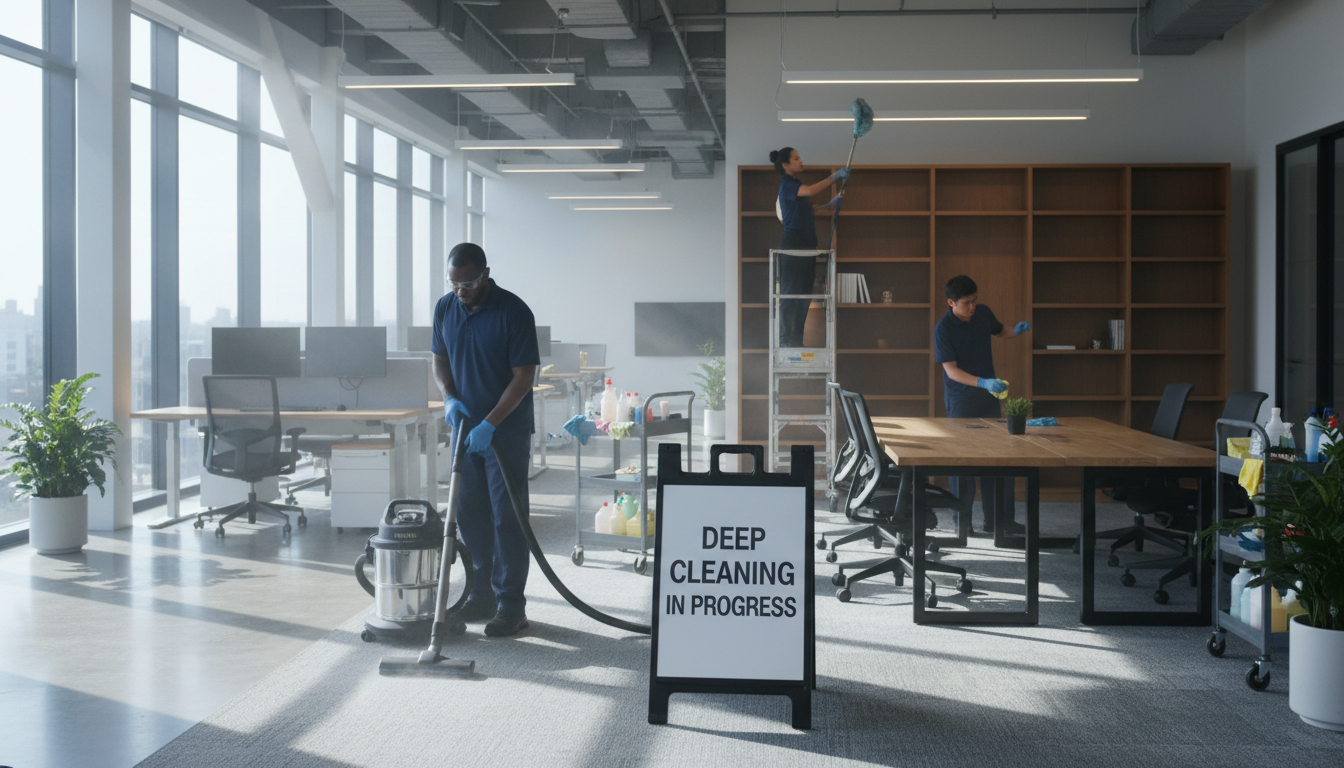
Developing a reliable schedule requires viewing your facility as a depreciating asset that demands specific maintenance to retain its value. Start by conducting a site audit that goes beyond surface level aesthetics; check for dust accumulation on high bay racking, grease buildup behind machinery, and the condition of floor sealants in high traffic corridors. These hidden areas often dictate the actual commercial cleaning frequency Tennessee facilities need to prevent premature aging of the building's infrastructure. Inspect transition points where different flooring materials meet or where heavy equipment is anchored to the slab, as these are primary collection points for abrasive grit.
A structured approach prevents the common cycle of deep cleaning followed by gradual decay. For retail environments, a retail store daily cleaning checklist ensures that customer touchpoints never fall below brand standards. In contrast, a warehouse cleaning schedule template must focus on safety and dust mitigation in zones where heavy equipment operates, prioritizing the removal of fine particulates that can infiltrate sensitive machinery.
Interval | Priority Actions | Objective |
|---|---|---|
Daily | Restroom sanitization, waste removal, high-touch disinfection, entryway care | Health safety and immediate presentation |
Weekly | Detailed floor care, corner sweeping, breakroom deep cleans, glass polishing | Managing soil load and preventing buildup |
Monthly | High dusting (vents/pipes), window washing, upholstery cleaning, light fixture detailing | Preserving air quality and asset longevity |
At New Vision Cleaning Services, our experience in commercial cleaning services in Tennessee and heavy duty construction allows us to spot technical maintenance needs that others miss. To design a plan that protects your investment and ensures operational efficiency, contact our team for a custom quote.
The key to maintaining a safe and inviting workspace in Tennessee is aligning your cleaning frequency with the specific demands of your industry and foot traffic. If you want expert help building a plan that works for your facility, you can learn more about New Vision Cleaning Services and our commitment to quality. We specialize in creating custom maintenance schedules; this ensures your environment remains pristine without any unnecessary disruption to your daily operations.