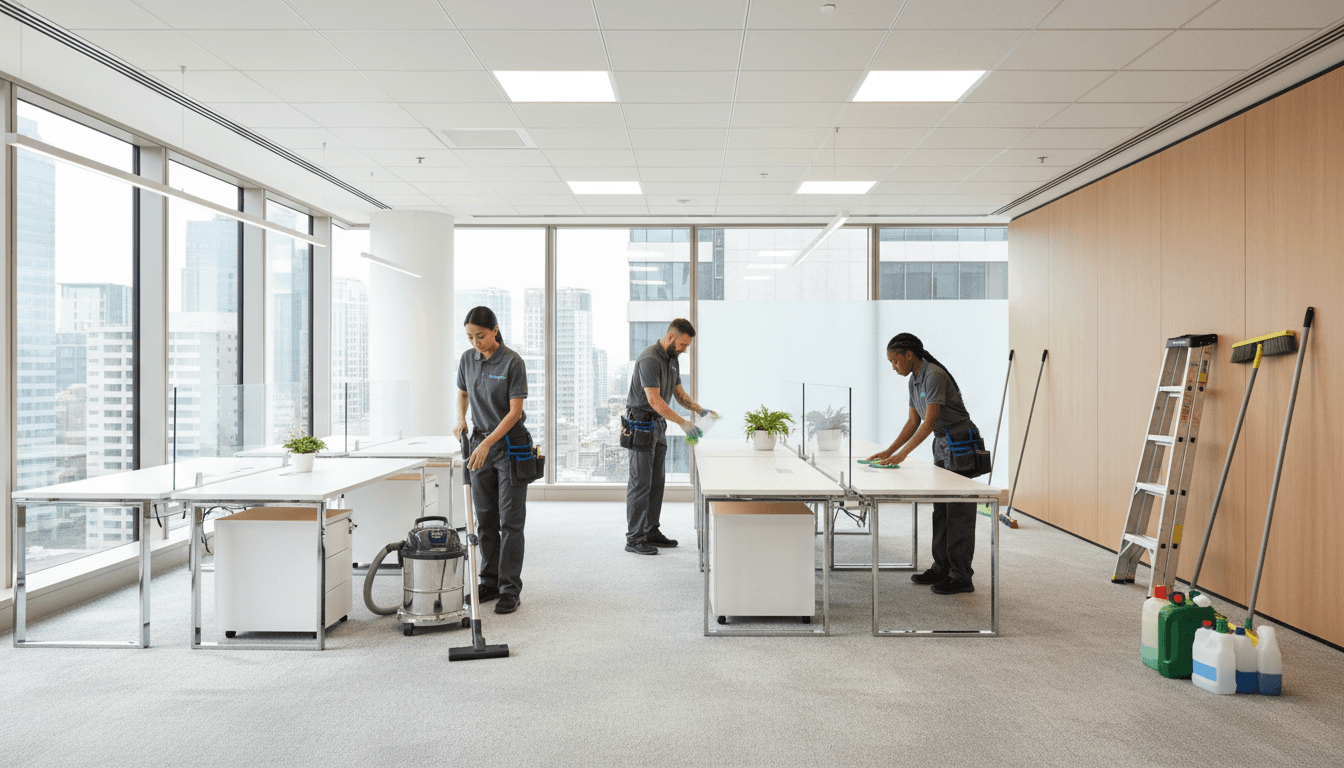
Final cleaning vs touch up cleaning differs in timing and scope, as the final clean is a deep, comprehensive scrub of all surfaces once heavy construction ends. Conversely, a touch up clean is a light, final pass performed after punch-list work to remove settled dust and smudges just before the client walkthrough.
You have spent months perfecting every architectural detail, but a thin layer of drywall dust on a mahogany mantel can still compromise a client's first impression. Many contractors treat post construction cleanup as a single event, yet failing to distinguish between the final clean and the touch up clean leads to avoidable friction during the walkthrough, and sometimes to paying to clean the same surface twice. Here is the quick rule of thumb: book a final clean when heavy construction is done and you need a deep, top-to-bottom decontamination pass; book a touch up clean after the punch list, when you need a short, targeted pass on fingerprints and settled dust right before handover. At New Vision Cleaning Services, we prioritize the precision required to transition a job site into a polished residence or professional workspace. This article examines the specific roles of each phase, walks through checklists, and explains the cost structures so you can decide which pass your project actually needs.
Which Cleaning Does Your Project Need?
Use this quick guide to decide before you book:
Final clean — Heavy construction is complete, most trades have exited, and you need a deep scrub to remove dust, adhesive, and paint residue before inspection.
Touch up clean — A final clean already happened, but punch-list work or settled dust has marred the space in the final hours before walkthrough.
Both — The build had a full final clean, then trades returned for last-minute fixes. This is the most common scenario and avoids paying to re-clean the same surfaces at the last minute.
| Final Clean | Touch Up Clean |
|---|---|---|
When | After heavy construction ends | After the punch list, before walkthrough |
Scope | Deep, top-to-bottom decontamination | Short, targeted high-touch detail |
What it removes | Drywall dust, adhesive, paint overspray, mortar haze | Fingerprints, settled dust, smudges |
Effort | Most labor-intensive phase | Light, precision pass |
The Difference Between Construction Clean and Final Clean Phases
Managing a job site in Middle or East Tennessee requires more than just keeping the debris pile low. To achieve professional commercial cleaning and maintenance results, contractors must navigate three distinct cleaning phases: the rough clean, the final clean, and the touch-up clean. Understanding the distinction in final cleaning vs touch up cleaning construction scopes is essential for scheduling sub-contractors and ensuring the project remains on track for a successful handover.
The rough clean occurs after the framing, electrical, and plumbing rough-ins are complete. Its primary purpose is to remove large debris, trash, and heavy sawdust so that flooring installers and painters can work in a safe, unobstructed environment. In contrast, the final clean is a comprehensive deep-scrub phase. This happens once the major trades have exited. It involves removing adhesive from windows, HEPA vacuuming drywall dust from every corner, and sanitizing surfaces. For new construction projects, this is the moment the craftsmanship becomes visible, moving the site from a work zone to a finished building.
For Tennessee contractors, failing to distinguish between these phases often leads to friction during the final inspection. A site that has only received a general construction sweep will not pass a client walkthrough. New Vision Cleaning Services recognizes that a truly walkthrough-ready site is the primary factor in securing an on-time handover and avoiding the delayed payments that occur when a client is distracted by red clay tracks or lingering dust. The final clean reveals the true quality of the build; the touch-up clean, which follows the punch list, ensures that quality remains pristine.
Phase 2: The Final Clean Deep Dive
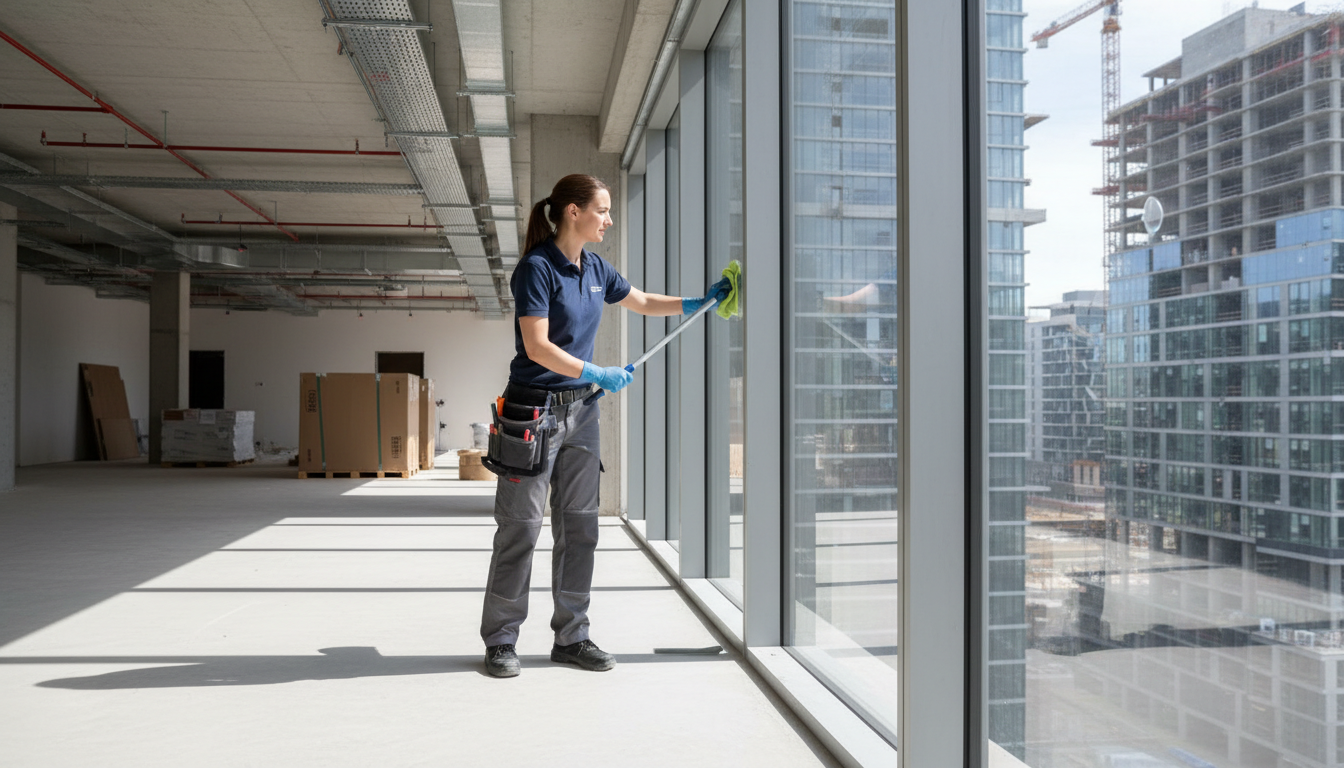
The final clean is where the heavy lifting happens. It is the most labor-intensive phase of the process, typically occurring after major mechanical trades like plumbing and electrical have finished their installations but before the final punch list is addressed. At this stage, the objective is to remove every tangible trace of the construction process, transforming a job site into a habitable environment.
In Tennessee, this phase involves unique regional challenges. Red clay mud, common in sites across Middle and East Tennessee, often gets tracked deep into the grain of flooring or ground into porous grout lines. Furthermore, the region's high humidity can cause fine drywall dust to settle and bond to surfaces, requiring specialized techniques to lift the residue without scratching finishes. To achieve professional commercial cleaning and maintenance results, the final clean must be systematic and thorough.
Scope of Work | Critical Action Items |
|---|---|
Windows & Glass | Removal of manufacturer stickers, adhesive residue, and paint overspray from both interior and exterior panes, frames, and tracks. |
Millwork & Cabinetry | Vacuuming and damp-wiping the interiors of all cabinets, drawers, and closets to remove hidden sawdust and construction debris. |
Sanitization | Full scrub of bathrooms and breakrooms, including sanitizing toilets, sinks, and the interiors of new appliances. |
Fixture Polishing | Detail-cleaning and polishing of chrome, brass, or stainless steel fixtures to ensure a mirror-like, high-shine finish. |
Dust Mitigation | HEPA vacuuming of all horizontal and vertical surfaces, including tops of doors, baseboards, and inside HVAC vents to capture microscopic particulates. |
When evaluating final cleaning vs touch up cleaning construction requirements, contractors must recognize that this phase is about volume and decontamination. Because New Vision Cleaning Services brings experience from demolition and mobile welding, we understand the specific grit and metallic dust that heavy trades leave behind. We focus on the crevices that general laborers often miss, ensuring that new construction projects are prepared for the final details. Without this rigorous deep-dive phase, any subsequent touch-up would be ineffective, as the sheer volume of airborne dust would continue to settle on surfaces indefinitely.
Phase 3: The Touch Up Clean (The Walkthrough Rescue)
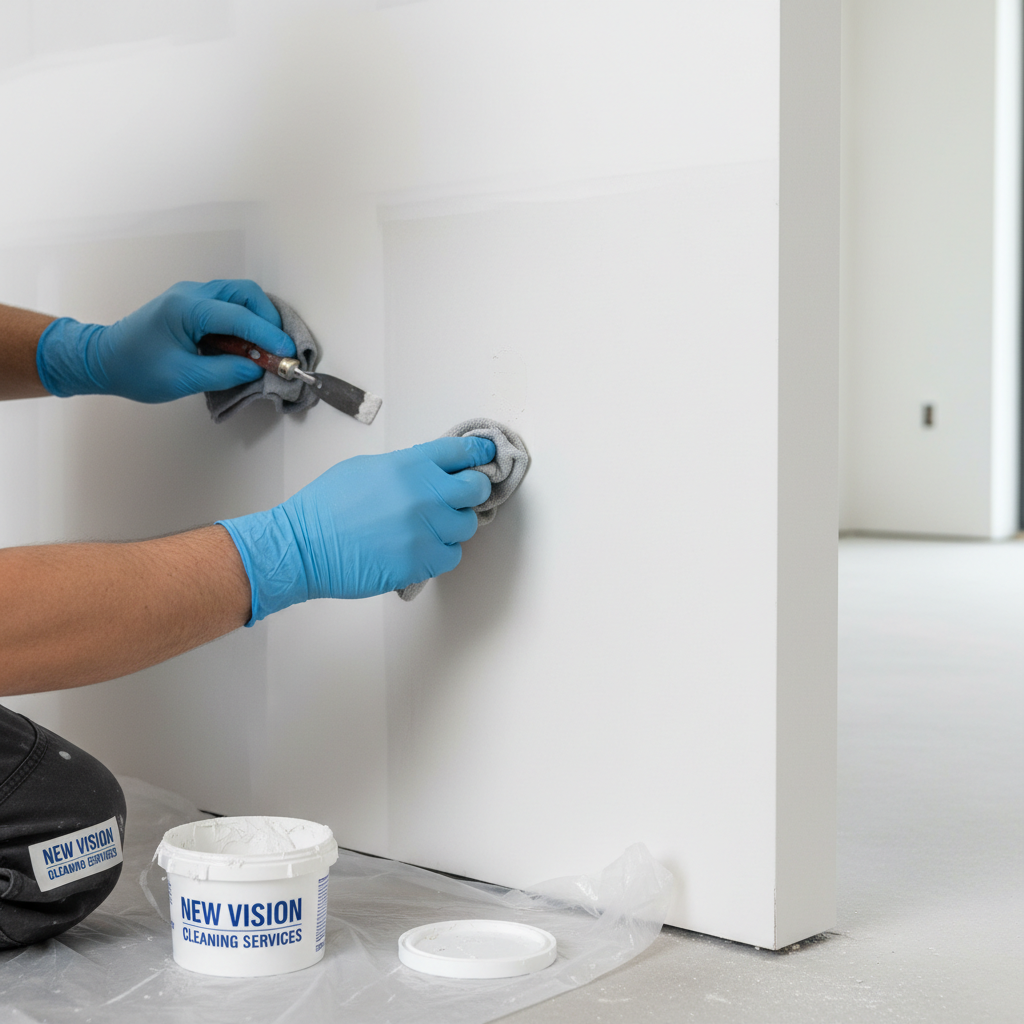
While the final clean removes the bulk of construction residue, the touch up clean serves as the final insurance policy before a key handover. This phase is frequently overlooked because contractors assume the site is already clean, yet it is often the most critical step in securing commercial cleaning and maintenance results that satisfy a discerning owner. The timing of this phase is precise; it must occur after the punch list is fully addressed and all trades have officially exited the building.
When a carpenter returns to sand a sticking door or a plumber swaps a gasket to resolve a leak, they inevitably introduce new debris into a sanitized environment. Even if no trades re-enter the site, the settled dust phenomenon remains a factor. In the 48 hours following a deep final clean, microscopic particulates that were suspended in the air during the heavy scrubbing phase finally land on horizontal surfaces. A touch up clean targets these late-settling layers, ensuring that when the client runs a finger across a countertop or mantle, it comes away spotless.
In the context of final cleaning vs touch up cleaning construction priorities, this stage focuses on high-touch surfaces and visual hot spots that can sour a first impression. Typical tasks include:
Removing fresh oily fingerprints from stainless steel appliances, elevator panels, and glass partitions.
Buffing door handles and light switches that were handled frequently during the punch list walk.
Wiping down baseboards and windowsill ledges where fine drywall dust has reappeared.
A final sweep and damp mop of the primary entrance to remove tracked-in grit from the final days of site activity.
New Vision Cleaning Services understands that the version of the building a client sees during their walkthrough is the only version that matters for the final payment. For new construction projects across Tennessee, this rescue phase bridges the gap between a finished job and a polished one. By treating the touch up as a distinct, strategic event, contractors protect the investment made in the initial deep clean and present a workspace that feels truly move-in ready.
Final Cleaning vs Touch Up Cleaning Construction Checklist

Distinguishing between these two scopes helps project managers allocate their budget effectively while ensuring no detail is overlooked before the owner arrives. The final clean is a thorough, labor-intensive scrub that handles the aftermath of heavy trades. In contrast, the touch-up clean is a precision-focused pass that addresses the micro-debris and smudges left by punch-list contractors.
Phase | Primary Objective | Key Task Checklist |
|---|---|---|
Final Clean | Deep decontamination and removal of construction residues. | - Removing paint overspray and dried adhesive from glass and trim. <br> - Deep scrubbing tile and grout to remove mortar haze. <br> - Vacuuming HVAC vents, returns, and interior duct edges. <br> - Cleaning the interior and exterior of all cabinetry and closets. <br> - HEPA vacuuming all horizontal and vertical surfaces. |
Touch-Up Clean | Restoring a pristine appearance after final trade adjustments. | - Dusting light fixtures where airborne particles have settled. <br> - Wiping oily fingerprints from door handles and switch plates. <br> - Sweeping the main entrance and clearing exterior walkways. <br> - Light vacuuming of high-traffic paths to lift tracked-in grit. <br> - Final buffing of stainless steel and mirror surfaces. |
For contractors managing new construction projects, understanding this final cleaning vs touch up cleaning construction breakdown is vital for scheduling. A final clean prepares the space for the inspector; the touch-up clean prepares it for the resident. New Vision Cleaning Services utilizes these checklists to ensure that our commercial cleaning and maintenance results remain consistent across every square foot of the job site, regardless of how many trades have passed through in the final hours of the build.
Why Contractors Should Not Skip the Touch Up Phase
Project managers frequently ask, "Do I need a touch-up clean after a final construction clean?" The reality of the Punch List Effect suggests that the answer is almost always yes. A final clean typically occurs while the site is still technically active. When a carpenter returns to plane a sticking door, a painter performs finish-coat touch-ups, or a plumber tightens a loose fixture, they inevitably introduce new sawdust, paint droplets, and oily fingerprints. These minor trade interventions immediately compromise the deep decontamination performed during the final clean.
New Vision Cleaning Services has observed firsthand how quickly a pristine site can revert to a work zone. For new construction projects in high-stakes commercial sectors, the touch-up clean serves as a vital insurance policy. It protects the initial cleaning investment by ensuring that the owner's first impression is not marred by a single overlooked smudge or a layer of fine dust that settled overnight. Our background in demolition and mobile welding gives us a unique understanding of how microscopic grit from mechanical adjustments can linger in the air long after the tools are packed. Skipping this phase risks the entire handover process. To secure the commercial cleaning and maintenance results required for final payment, the distinction in final cleaning vs touch up cleaning construction must be respected. The touch-up clean is the final barrier against the debris generated by last-minute punch list fixes.
Understanding Final Cleaning Construction Price and Costs
Determining the budget for the final phase of a build requires evaluating several site-specific variables. While square footage serves as the baseline, the density of detailing often dictates the total labor hours. For instance, a facility with extensive floor to ceiling glazing or intricate cabinetry will require more intensive man hours than a standard shell warehouse.
Factor | Impact on Cost |
|---|---|
Square Footage | Defines the base labor and chemical volume required. |
Window Count | High pane counts increase specialized tool usage and time. |
Debris Volume | Heavy post-trade waste requires more hauling and prep. |
Timeline | Expedited or overnight schedules often carry premium rates. |
Scheduling plays a vital role in managing the final cleaning vs touch up cleaning construction budget. Last minute mobilizations often incur higher costs due to the logistical challenges of shifting crews. To maximize value, contractors should consider a combined Final and Touch-Up package. Booking these phases together is typically more cost-effective than requesting a standalone touch-up at the eleventh hour, as it allows for better resource planning and continuity of care.
At New Vision Cleaning Services, our expertise extends beyond standard janitorial work. Because we offer versatile support like demolition and mobile welding, we possess a unique technical perspective on remediating residues left by heavy trades. We understand the specific costs associated with removing metallic shavings or industrial adhesives that general cleaners might overlook. This comprehensive background ensures that new construction projects receive commercial cleaning and maintenance results that reflect the true value of the build.
Knowing the distinction between a final clean and a touch-up is the secret to a flawless walkthrough. While the final phase handles the heavy dust and debris, the touch-up ensures every surface shines before the keys are handed over. If you want expert help to streamline this process, our team can handle the heavy lifting for you. Explore our full range of services to see how we help contractors deliver perfection. With a professional team on your side, you can focus on your next build while we ensure your current project is spotless.